Showing posts with label TLEW. Show all posts

Thursday, May 14, 2009

The Blue Bird returns to Waterville!


Sorry for the delay, but I have still been busy as of late...
After a long and arduous struggle taking almost six months of time and the countless efforts of over a dozen people, the TLEW's Blue Bird passenger train arrived at the Waterville station for the first time in years a mere 45 minutes behind schedule!
My previous post gave details of the work needed on 5109. In addition to this close to a mile of track needed repairs. Though most of this work was accomplished in the last two months of our maintenance seasonwe still made opening day!
Below is a (hopefully) once in a lifetime photograph of 5109's prime mover (engine), with any luck the scale of repairs requiring all of the doors to be removed won't be nessasary again!

Tuesday, April 28, 2009

5109

I think it's high time to post about the project that has been consuming the vast majority of my free time for the last several months: Toledo Lake Erie and Western locomotive 5109...
Over the course of the winter I have been involved in several nessasary repairs including replacing fan and drive belts, a severely belated oil change on the locomotive's air compressor, general maintenance and, most importantly, replacing the number 5 cylinder head and sleeve...
By now I have spent more time in the so-called "dog house" then I care to think about... But at this point I am not going to be satisfied until I watch this locomotive hitch up all three coaches and board the final coach for the trip to Waterville...

Unit 5109 is an S4, built by the American Locomotive Company (Alco) in 1953 for the Chessapeke and Ohio railroad (later known as the Chessie System). It is powered by a Seymour and McIntosh (Alco) 539 6-cylinder, turbocharged prime mover rated at 1,000 horsepower. It is a switcher-type locomotive, and thusly it's gearing and traction wiring are tailored for low-speed, high-torque operations.
This locomotive is over 50 years old, and is showing signs of it's age. Over the last three years the compression seal on cylinder 5 failed, resulting in a catastrophic compression leak. Uopn removing that cylinder's head it rapidly became obvious that both the head and the cylinder sleeve would need replaced; both showed a very obvious gap in excess of .020 inches (though this may not seem like much this is a compression seal that during the power stroke is subjected to tens of thousands of pounds per square inch pressure). Work ensued removing the damaged components from 5109 and scavanging replacement parts from one of TLEW's "dead" locomotives, engine 112.
This last weekend we seated the replacement cylinder sleeve, piston and cylinder head, and are striving to finish repairs and test the locomotive, and remove the "dog house" from the locomotive, hopefully before this weekend...
Here are some pictures of the parts involved, just to give an idea of the scale of the work involved...


The head of a single cylinder of the Alco 539 prime mover. Each cylinder displaces 1,595 cubic inches, for a total displacement of 9,572 cubic inches across all six cylinders. The two men in the background should give an idea of the size of this part.


The cylinder sleeve. This massive steel tube is pressed into the cylinder block, and is sealed by four O-rings. I had initially thought it would take two minutes to install the sleeve... In fact it took almost eight hours of excrutiating work. Installing the equally impressive piston (which I do not have pictures of) took a a mere two hours total...


The cylinder sleeve, installed into the cylinder block. The socket and extension at the edge of the picture are a 1-inch drive...

Friday, December 19, 2008

Retroreflectors

No, I don't mean "Old School" reflectors. What I mean is reflectors that redirect most of the light hitting them back to the source.
To the left is a picture of the TLEW emblem reflector that I am borrowing, as well as the two that I have made so far. The "candy stripes" are for use on the door of my truck, the DOT-style one is for use on either the bed or the bumper (thought I may end up attaching a couple of them directly to my rear bumper. they are, after all, the only "useful" bumper sticker in existance!
As with my PPE post, these magnets are intended both for my personal safety, and to make my truck look more "official." I think they do a good job at both.

Cylinder Head

After weeks of waiting I finally got the tools and ambition to unload this massive hunk of cast iron from the bed of my truck. This is one of six cylinder heads off of an Alco 539 6-cylinder prime mover (the engine of a locomotive). At 450 lbs it is approximately the size and weight of the not-too-small V8 engine in my truck! In terms of physical bulk it is also similar.
This head, as well as the one that needs repaired on TLEW 5109, both have erosion on the large tongue visable on the underside of the head. Time, corrosion and pressure have taken their toll, and both need this tongue either rebuilt or patched in order to avoid further compression leaks.
This head is probaly a sample part; the one currently on cylinder 5 of 5109's prime mover may be in better condition. In either event I am going to use this head to get one or two quotes on repairing the tongue.

Saturday, November 29, 2008

PPE

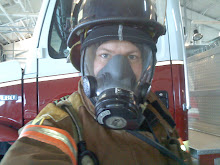
Me, dressed in appropriate Personal Protective Equipment (PPE) for track work at or near grade crossings. For those of you not familiar with PPE I will give an explination of the function of each piece of equipment and why it is important.

Starting at the top is the hard hat. In truth it is largely unnessasary for the type of work I am doing, however with the TLEW emblem it serves to make me appear more "official." In addition it does at least somewhat protect my head from falling debris while clearing brush, doing signal work or working above my head in general.
Next is the safety glasses. I have perscription safety glasses and wear them my entire waking day. Safety glasses protect my eyes from flying debris.
Just from looking at the picture the safety vest's function should be obvious: In normal, non-directional light the white reflectors appear gunmetal gray! I bought the vest for working near road-railroad grade crossings, mostly to be sure that I am visable to passing motorists. But again, I think it helps me to appear more "official."
My Carhartt coat in and of itself could also be considered PPE. In addition to keeping me warm it is also extremely abrasion resistant, and thus protects me from cuts and scrapes whilst I am working.

That's all I have for now. I have plans for another post, and pictures for it as well, which I plan on posting tommorow.

Friday, November 28, 2008

My Truck, Ready for Action!

My truck actually looks semi-important right now with the TLE&W emblem attached to the door! The emblem is a magnet, which I borrowed to use whilst working on the railroad, just to make me look more "official." I just finished painting the rust at the bottom of the door, which certainly helps make the whole thing look better.

Now if only the passenger side looked better...

Tuesday, November 25, 2008

Train Whistle


My first post is about one of several projects I am doing for TLEW: A real train whistle (Train Horn is more technically accurate). Yesterday I removed these horns from Coach 404 (the frontmost coach on the Blue Bird train). When I got them home I promptly hooked them up to my air compressor, opened the valve and... Nothing happened!
Despite not yet having eaten supper I proceeded to tear the diaphram assemblies (the actual noisemaking part of the horn) and found one filled with mud dauber nests, one full of spider nests and the third and fourth just plain filthy. I quickly cleaned them up and tested them again, and one horn then started working. By then I was cold and tired, and gave up for the day.
Today when I got home I went back to work. I cleaned all four diaphrams with solvent to remove the oils and dirt from them before testing them one at a time. Once all three chimed nicely I went to work on repairing the bells (trumpets). Notice the silver band on the longest bell? Yes that's tape! That bell was literally broken in half when I recieved it, the tape is just there for testing purposes. Later I will solder the two halves back together.
In this post is a test video of the horn... Yes it really is that loud! Since one of the trumpets is missing I converted the horn assembly to a three-chime by plugging the air inlet to the damaged diaphram. The result: It sounds like there's a train rolling through Texas! Of course the REALLY impressive part is the fact that I tested this horn on my grandma's air compressor at 100 PSI, which is pretty close to the train brake pressure of 90 PSI. The small air tank can't flow enough air to keep up with one chime (horn assembly), let alone three. However this is not the case on the train, where the air supply is both less restricted and virtually unlimited!
Obviously I'm not done. I still need to see about straightening up the one bell, I need to solder up the other, and I need to strip off all of the old paint and repaint the whole thing, before fabricating a mounting bracket. Once all that's done it'll be ready to be mounted to Coach 408 (the rearmost coach on the train, which acts as the head-of-train when the train is backing up).